The ROI of customer portals: how to improve CX and reduce costs
UNRVLD generates more return for less investment with digital self-service portal solutions

- Customers are trained to expect seamless self-service experiences online by businesses such as Uber, Monzo and Amazon
- UNRVLD’s clients achieve an ROI from customer portals built on their existing infrastructure through £1m+ operational savings on everything from call centres to paper and postage
- At the same time, our clients in sectors including utilities, finance and professional services report improved customer satisfaction and lifetime value from enabling low-friction online customer portals
Digital-first businesses such as Uber, Monzo or Amazon design their services and processes to enable customers to do what they want, wherever and whenever they want. This sets high self-service expectations for B2C and B2B customers. Creating an online customer portal is one way to tackle this challenge. Allowing our clients to build better services on their existing digital infrastructures delivers significant financial and customer satisfaction returns compared to the required investments.
At UNRVLD, our teams are experienced in designing new portals and upgrading existing services to add significant value to end customers’ online experiences, and provide a substantial ROI across operations and relationships. We’ve built portals for clients across a variety of sectors, and leveraging a variety of platforms, tracking the success of these digital products over time.
From cutting the cost to serve end users, to improving customer experience and as a platform to launch new services, portals have quickly become an essential part of a digital business infrastructure. Below we explain how to maximise value from a portal in both the short and longer term, including as a stepping stone to implementing AI to support customer service functions.
The behavioural shift towards self-service
Customers increasingly prefer online self-service experiences that allow them to complete tasks independently at a time and place of their choosing. Research shows that 61% of customers prefer to use self-service to solve simple issues. This creates a demand for businesses meet these new expectations, but also presents an opportunity to reduce operational load, retain customers and improve conversion and completion rates.
One of UNRVLD’s clients in the utilities sector has seen customer portal results which demonstrate customer demand and impact. Following the implementation and optimisation of a digital portal in 2023, three key customer journeys – meter readings, direct debits and home moves, shifted significantly towards digital usage. On average, 65% of these journeys are being completed online two years after the portal launched.
Understanding customer expectations is key to avoiding three mistakes that businesses make when implementing a portal, that can impact on its success and the return achieved.
Interfaces change but processes don’t: Businesses make the mistake of replicating offline processes online through portals, creating friction for users – ie replicating a paper form online, rather than creating a personalised interface that pulls in known data and hides irrelevant fields. Key to delivering seamless self-service through portals is to examine business processes and redesign them if necessary.
Expecting immediate adoption: Any customer portal return on investment model should assume a ramp period for users to become used to servicing themselves. Specific communication and enablement plans may be necessary to support those who are less comfortable with digital platforms. A phased approach can also be taken to move high-volume processes to a self-service portal first, as described with our above utilities client.
Not utilising data to inform service features and enhancements: Analysing data from your other customer service channels can help you identify use cases for your customer portal in the first place. And once you have a portal, continuous optimisation ensures that you maximise adoption rates, and therefore the ROI generated.
Forrester believes that financial services firms who take a data-driven approach to deliver more personalised digital service capabilities and enhancements are better at attracting and retaining customers, precisely because they are matching changes to customer behaviour and expectations that are already taking place.
How does an online customer portal deliver ROI?
Building a portal on your existing digital infrastructure is a cost-effective way to introduce digital self-service features to your customer base. When we work with a client to build a portal, we start with the return on investment model to fully understand the business case and inform functionality that will have the most impact for both the business and users.
Considerations for a customer portal return on investment model vary by sector and client, but include:
- Reduction in customer service interactions or account managers’ time for easy queries and account changes;
- Reduction in manual administration of accounts – including scanning or manual keying of data on paper forms;
- Reduction in paper and postage for physical communications – such as invoices, statements, letters and forms;
- Increase in average lifetime customer value: both as customer churn is reduced and customers feel confident to purchase additional products or services;
- Opportunity to introduce new paid-for services and business models where digital self-service is a crucial aspect of the proposition.
Direct ROI: How digital portals deliver immediate business value
By shifting high-volume, low-complexity interactions into self-service journeys, businesses can vastly reduce administrative burden and cost to serve their customers.
This can translate into thousands of hours saved across teams each year, reducing staffing pressures, lowering outsourcing costs or supporting the reallocation of resources to higher-value work.
For our utilities client, call volumes have reduced by tens of thousands a year. For example, queries related to the “house moves” journey alone have reduced by 40%. Administrative savings have also been profound. Automation of eligible forms has resulted in an estimated 735,000 hours of manual effort saved.
In under two years the organisation achieved a £1.4 million saving in paper, driven by increased digital uptake for processes that used to require paper forms. With further optimisation planned, an additional £3.7 million in paper savings has been profiled as usage of the portal continues to increase.
Indirect ROI: How self-service portals improve customer satisfaction and long-term value
The immediate saving from introducing self-service are very tangible. However, the indirect ROI of customers who feel their needs are being better met delivers long-term value.
A well-designed portal empowers customers to solve problems independently and therefore reduces the time it takes for them to be served by your business. For example, one of the goals of our work to introduce self-service elements for Irish bank PTSB was to reduce the requirement for customers to visit branches for simple administrative tasks.
PTSB needed to onboard many new customers when two competitors pulled out of the Irish market. Delivering a low-friction digital experience for customers was seen as crucial to instil trust and confidence within the new customer base. The impact of this is felt through improved lifetime customer value as much as reducing the cost to onboard new customers.
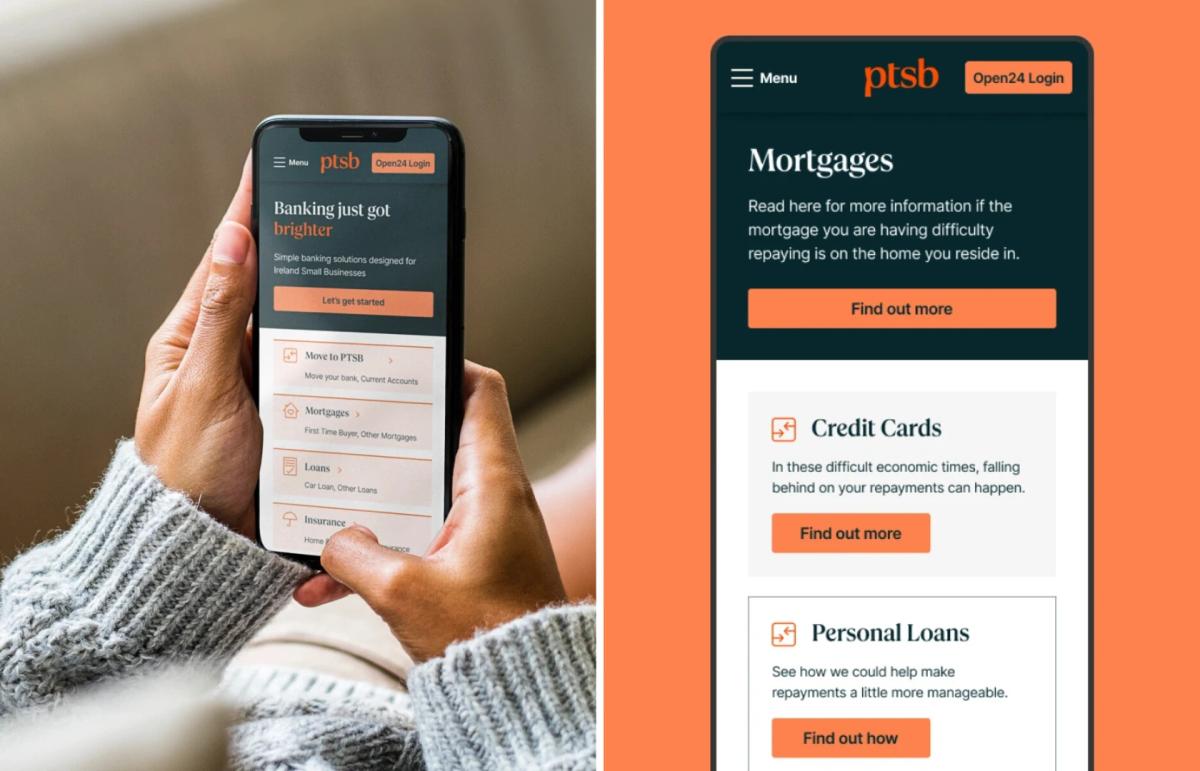
PTSB's digital self-service space is designed to instil customer confidence
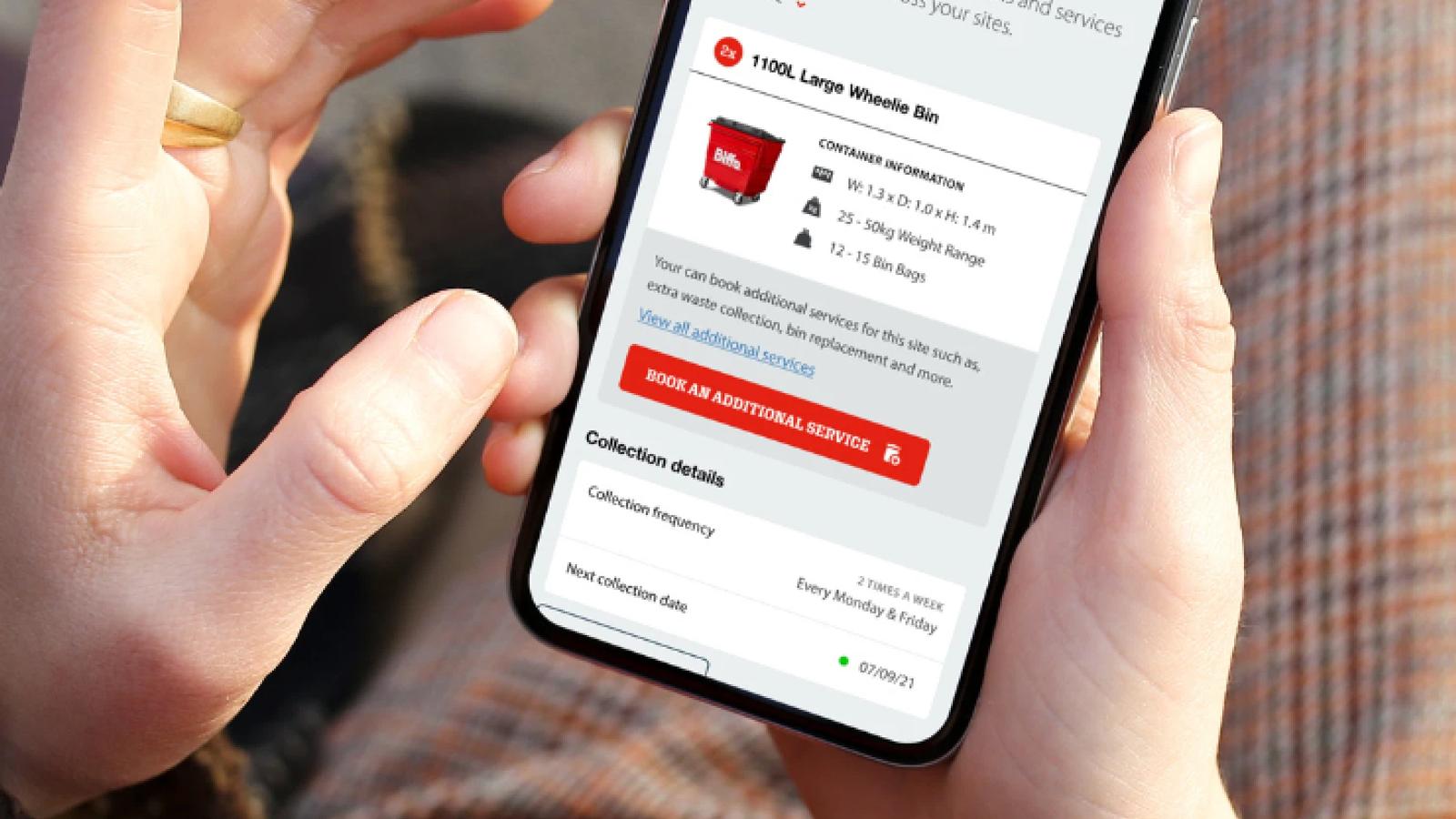
Waste management provider Biffa is another UNRVLD client who needed its customer portal to deliver value-adding outcomes for clients. The myBiffa self-service portal achieved a 33% reduction in call centre costs within the first year through simplifying waste management for businesses who use the service. Every call that no longer needs to take place is a time saving for Biffa’s customers as much as the organisation itself.
In addition, the MyBiffa portal gives users access to data that allows them to make more informed decisions about their waste and environmental impact, providing them with additional value as businesses aim to reduce their carbon impact.
The results our clients achieve with their portals demonstrate that users who experience simple, low-friction digital journeys are more likely to remain loyal, engage more frequently and be receptive to additional services over time.
Turning your customer portal and data into continuous ROI
Once our clients have launched a customer portal, we recommend that they treat it like any other digital product and continue to optimise it to maximise results.
Every touchpoint can provide valuable insight into customer journeys, including their behaviour, pain points, preferences and, most importantly, where there may be customer drop-off. Continuous optimisation can include:
- Portal Optimisation – Focus on refining your customer journeys based on real user behaviour insights and feedback;
- Portal Personalisation – Unlocking your rich customer data to make the portal experience personalised for customers;
- Customer Insights – Learn what your customers value and anticipate their needs to continuously improve your service and competitiveness;
- Automation and AI – Reduce repetitive and time-consuming tasks and free your customer service teams to focus on driving more value for customers;
- Re-engineer or create new service propositions based on a digital self-service approach.
A further stage of digital sophistication will see AI agents begin to be surfaced to increase the complexity of tasks and queries that a portal can support.
The first generation of chatbots have been powered by limited and generic Q&A style content, often resulting in a poor user experience and results. AI agents communicate in natural language and have more autonomy to support customers as they can access real customer data and act on it.
Financial service firms are already considering how agentic AI will further transform their cost to serve and move from back-office administration to front end customer interactions. And we are currently working with a B2B client on a similar proof of concept for a service AI agent.
Investing in the experience delivered by a customer portal now, moves our clients along the digital maturity curve and positions them to be able to exploit data-driven personalisation and agentic service as solutions continue to evolve.
At UNRVLD, we work in partnership with businesses to design, build and optimise digital portals that deliver measurable ROI – balancing seamless user experience with robust integration, security and scalability. If you’re exploring how a digital customer portal could reduce operational costs, improve revenue and future-proof your business, a conversation with our team is a solid place to start.